Proving the leak is outside
The first job is deciding whether the loss is in the buried line or somewhere inside the building. Isolating at the shutoff and watching the meter or the pump separates the two in a few minutes.
The main water line is the single pipe that carries every drop into the house, and it runs buried from the meter or the pressure tank to the wall. When it starts leaking you often see it in the yard or on the bill long before you see it indoors. An independent plumber can find where the line has failed and explain whether it can be repaired or should be replaced; ask for the price before anything is dug.
If you can find the shutoff, closing it stops the loss while you wait. In most homes here the valve sits where the line comes through the wall at the front of the house, and there is a second one in the meter box near the road. Leave the meter box lid to the plumber if it is heavy, iced over or full of water, and do not dig at a wet patch to look for the pipe, because gas and electric services are often buried in the same trench.
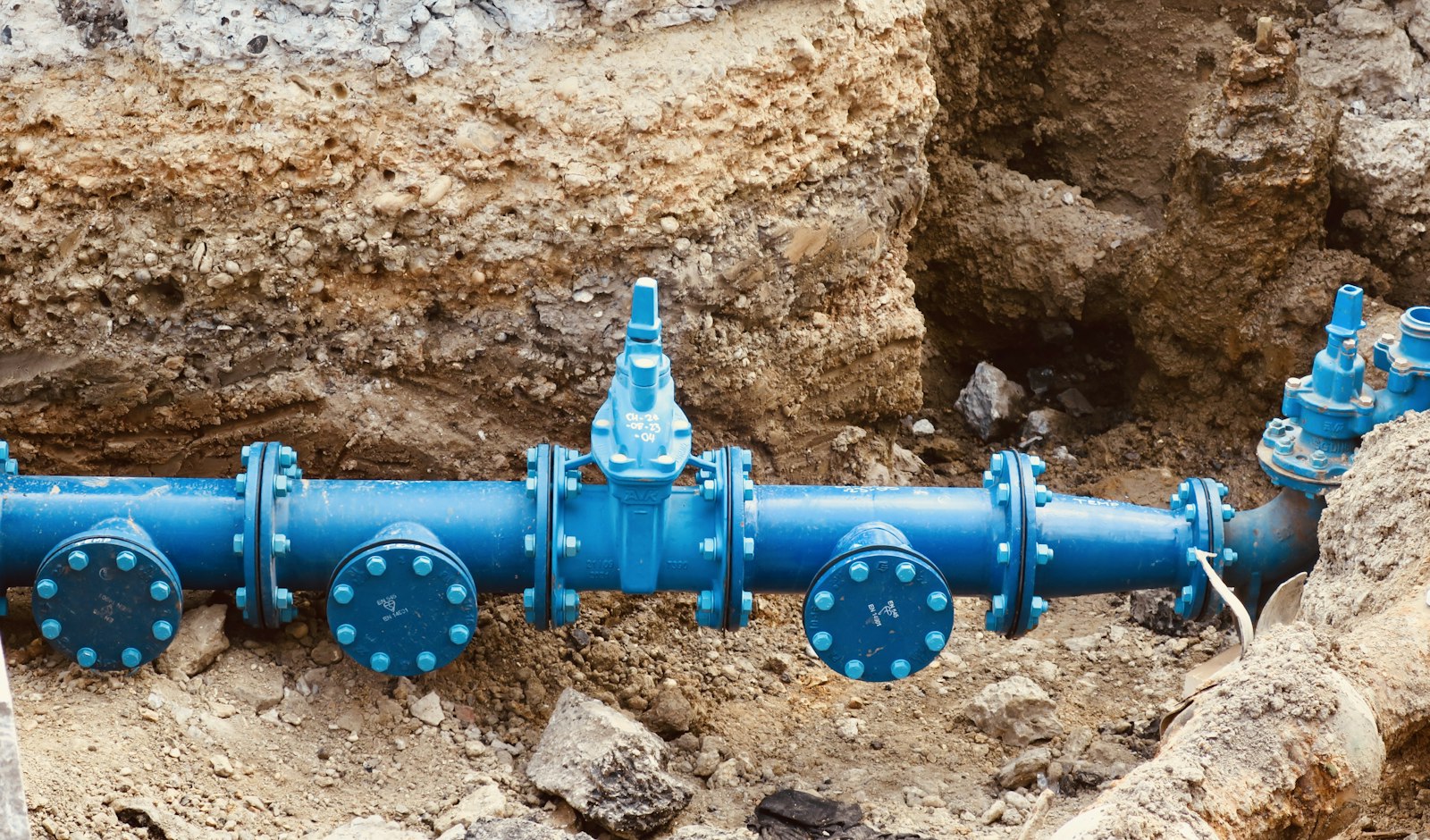
The first job is deciding whether the loss is in the buried line or somewhere inside the building. Isolating at the shutoff and watching the meter or the pump separates the two in a few minutes.
Pressure testing, listening equipment and tracing the run narrow the failure down to a length of ground rather than a whole yard, so the digging is kept small.
A single clean break in sound pipe can be cut out and joined. A line that is corroded end to end, undersized or already patched in several places is usually better replaced in one piece.
Some runs are best opened up, others can have a new line pulled through the old path so the driveway and landscaping stay intact. Access, depth, distance and what is buried alongside decide which is possible.
A repair is the right moment to put a working shutoff where you can reach it and to check the pressure coming in. Pressure that is too high shortens the life of every fixture behind it.
Ask for the line to be pressure tested before the trench goes back, the ground compacted and restored as agreed, and to be shown the new valve and where the line now runs.
Where the leak sits decides who repairs it. From the meter into the house the line belongs to the property, and a plumber can work on it. On the street side of the meter it belongs to the water provider, so the right call is to them; ask the plumber to confirm which side yours is on before any digging. On a property with a well, the house side starts at the pressure tank; the pump, the drop pipe and the casing are a separate trade.
Length and ground make the difference in Yavapai County. Rural parcels can have a run of a hundred feet or far more between the source and the house, often through rocky ground, so a replacement is a bigger job here than it is on a town lot. At this elevation a shallow section under a driveway or crossing an unheated crawl space can also freeze and split, which is a repair rather than a whole new line. Galvanized pipe from the middle of the last century corrodes closed from the inside and shows up as poor pressure long before it leaks at all.
If you are not sure the leak is outdoors, start with leak detection. If a line has already split and water is spreading, go to burst pipe repair. Poor hot water pressure on its own is a different problem, and the repair or replacement comparison covers it. Acreage properties are handled a little differently, as our Williamson Valley page explains, and you can see every service listed on the services page.
Shut every fixture in the house and watch the meter, or listen for the well pump. If the dial keeps moving or the pump keeps cycling with nothing running, water is escaping somewhere. A wet or unusually green strip in dry ground points outside. Ask the plumber to confirm which side of the wall the loss is on before anyone digs.
Usually not. Once the failure is located the opening is made at that point, and some runs can have a new pipe pulled through the existing path instead of being trenched. If the line is old enough that a full replacement makes more sense, ask for both plans and both prices first. See how the leak is located.
As a rule the property owner owns the line from the meter to the house, and the provider owns what is on the street side of it. On a well system the house side begins at the pressure tank. Ask the plumber to check which side the leak is on first; if it is on the street side, the right call is to the water provider.
A properly buried run rarely does, but shallow sections, pipe crossing an unheated crawl space and any exposed length at a well house or hose bib certainly can at this elevation. Those are the parts to insulate or reroute. If a split has already happened, see burst pipe repair.
Call and describe what the meter or the pump is doing and where the ground is wet to reach a provider.